

In electrical and trade contracting, the shop that responds first and shows up first usually wins the job, and GPS fleet tracking is how a small outfit responds and dispatches like a much bigger one. When a commercial tenant loses power, a main breaker keeps tripping, or a general contractor needs a licensed sub on site before tomorrow's rough-in inspection, the electrician who answers with a real arrival window (instead of "we'll try to fit you in") is the one who books the work and keeps the account. Most fleet tracking articles sell the technology on fuel and idling savings. Those savings are real, and we cover them. But for electricians and contractors, knowing where every van and crew is lets you send the right license level to the right job, hit tight inspection windows, prove exactly when work was done, and recover a stolen van or copper-loaded trailer fast when one goes missing.
Why Fleet Tracking Is a Sales Tool for Electrical Contractors
The work is stacking up faster than the trade can staff it. According to the U.S. Bureau of Labor Statistics Occupational Outlook Handbook, employment of electricians is projected to grow 9 percent from 2024 to 2034, much faster than average, with about 81,000 openings per year and roughly 818,700 electricians already working as of 2024. BLS specifically calls out alternative power (solar and wind) as a growth driver, and the same wave includes EV charger installations, battery storage tie-ins, and service-panel upgrades to support all of it. Those are project jobs that pile on top of the emergency service calls an electrician already runs, and they compete for the same trucks and the same licensed hands.
When licensed labor is the bottleneck, leads are not your constraint. Capacity is. Every hour a van spends driving to the wrong job, waiting on an unclear dispatch decision, or sitting idle is an hour a journeyman is not billing. That is why fleet tracking belongs in the revenue conversation for an electrical or trade contractor, not just the expense line. Real-time visibility into where your crews are lets you convert more of the day into completed, inspected, invoiced work, and it lets you say yes to the panel upgrade or EV install that would otherwise wait a week, which is exactly how you grow without over-hiring in a tight labor market.
Respond First, Win the Job
Speed wins work. Harvard Business Review research on the short life of online sales leads found that firms contacting a prospect within an hour were nearly seven times as likely to have a meaningful conversation as those that waited even an hour longer, and more than 60 times as likely as those that waited a full day. The average first response took 42 hours, and 23 percent of companies never responded at all. When a facilities manager with a dead panel is calling three electricians down a list, that gap decides who gets the purchase order.
Fleet tracking turns speed into a promise you can keep on the phone. Picture a five-van electrical shop that gets a 2 PM call: a retail tenant has lost power to half the store and cannot run registers. Instead of radioing around to find out who is free and where, the owner glances at the live map, sees a journeyman wrapping a service call two miles away, and commits to a one-hour window on the spot. That specific, confident answer is what closes the booking before the customer dials the next number. Connected Fleet supplies the live location; the owner makes the call.
Send the Right License Level to the Right Job
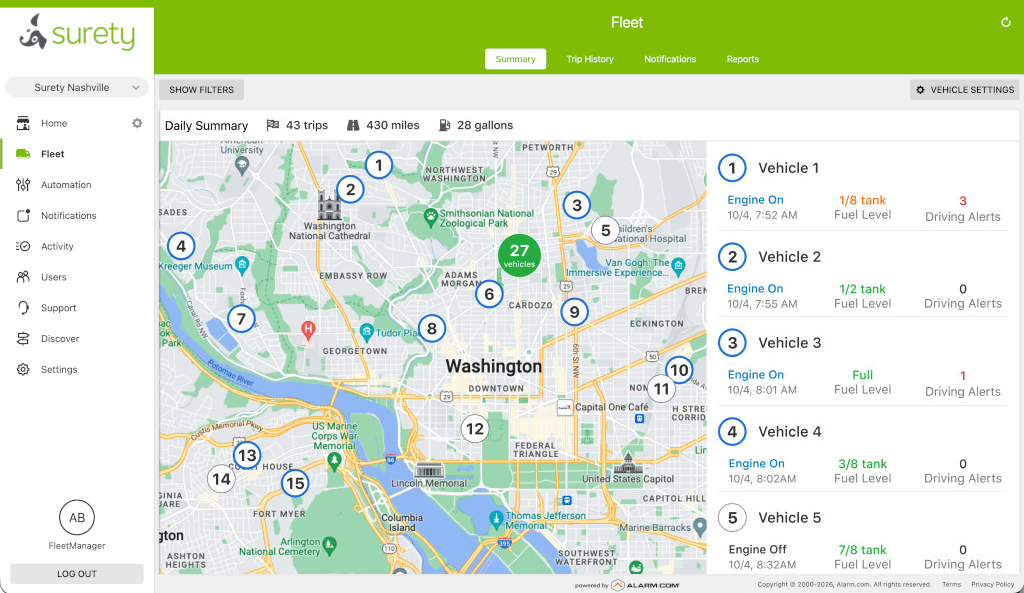
This is where electrical dispatch differs from ordinary field service. Much electrical work must legally be performed or signed off by a licensed journeyman or master electrician, while apprentices work under supervision, so the nearest truck is not always the right truck. You need the closest crew that is actually licensed for that scope. Real-time location makes that a fast decision the owner or dispatcher makes from the live map, because you know each technician's license level and you can see who is nearby. The software shows where everyone is; you choose who to send.
Getting this right protects both revenue and compliance. Sending an apprentice to a job that needs a master means a second trip, a delayed inspection, and an unhappy customer, while sending your master electrician across town when a licensed journeyman was three blocks away wastes your scarcest resource. Using live location to match the right license level with the shortest drive is how a small shop keeps master-level hours on master-level work. Industry data suggests that dispatching the closest appropriate vehicle rather than the next available one can lift jobs completed per day by roughly 10 percent, and for an electrical contractor that gain compounds because it also keeps your licensed capacity aimed where it legally has to be.
Coordinate Crews, Permits, and Inspections Across Job Sites
Electrical and general contracting run on a schedule that inspectors and permits control, not just customers. A rough-in or final inspection has to pass before the next trade can proceed and before you can bill the milestone, and inspectors often give tight arrival windows with little tolerance for a no-show. When you can see that your crew finished the rough-in and cleared the site, you can schedule the inspection with confidence and have someone there to meet the inspector. When an inspection fails and a re-inspection (a callback) is required, you can see which crew is positioned to swing back and fix the deficiency fastest, instead of losing another day.
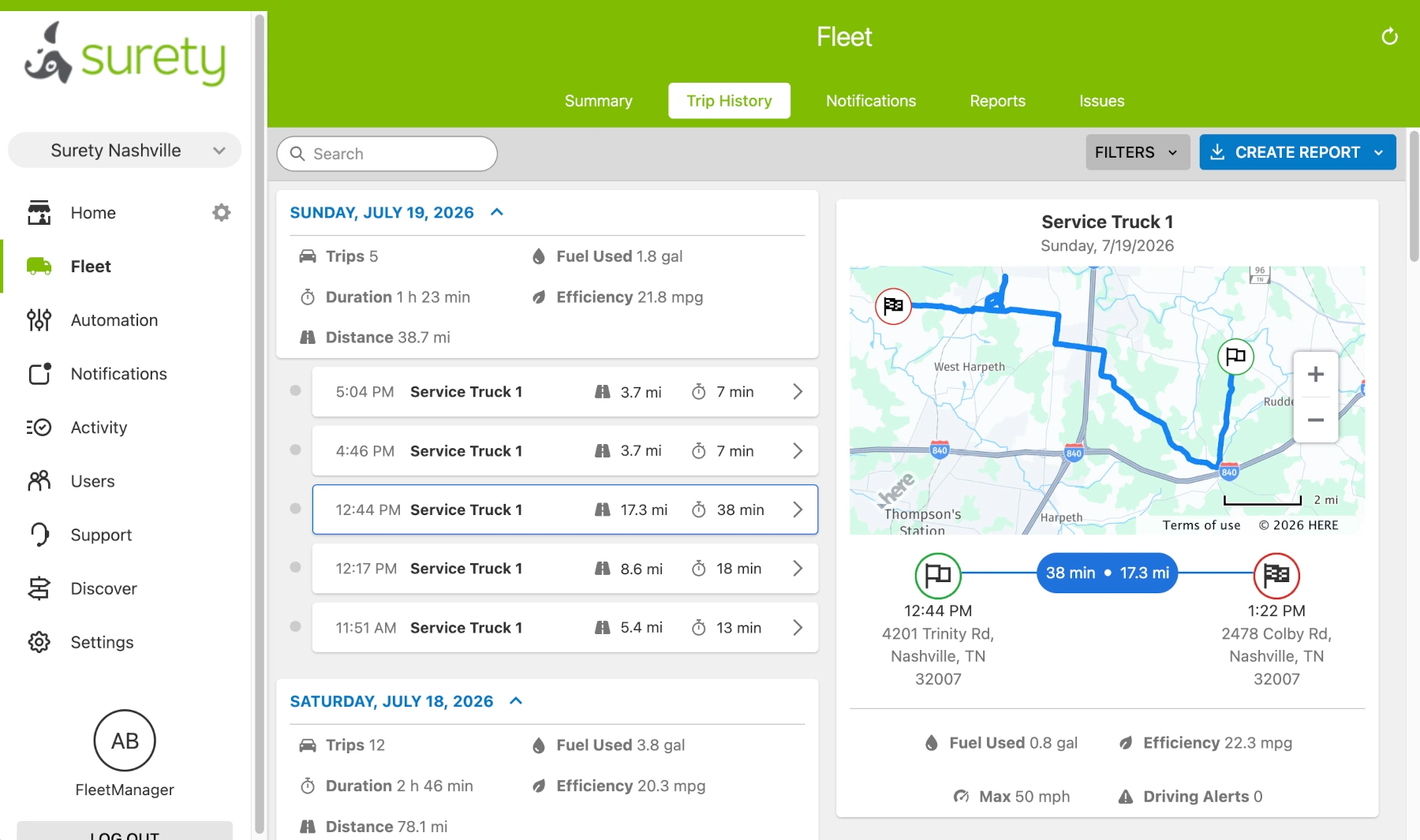
For general contractors juggling multiple subs and crews across several active sites, that live picture is even more valuable. Knowing in real time which crew can absorb an urgent add-on, cover a punch-list item, or meet an inspector keeps a project moving and keeps you off the critical-path blame list. Trip history also gives you a defensible record of when your crews were on each site, which matters when a GC and a sub disagree about delays, backcharges, or who held up the schedule. In a business where a missed inspection can stall an entire job, the ability to coordinate crews around inspection timing is a direct competitive advantage.
Proof of Service: Win Disputes and Bill With Confidence
Every trip is logged automatically with start and end times, the exact route with playback, distance, and duration, all exportable. On time-and-materials work, and for a sub billing a general contractor, that timestamped record is what protects your margin when someone questions how long the crew was actually on site or claims your electrician never showed. It also backs up change orders and trip charges: if you rolled a truck for an after-hours emergency or made an extra site visit to meet an inspector, you have the proof, not just your word.
The upside is not only defensive. A contractor who can produce clean, provable presence records has a real edge when bidding repeat commercial, industrial, or property-management work, where accountability is part of what the client is buying, and where retainage and closeout can hinge on documentation. Being able to show exactly when your crew arrived and left on every visit turns proof of service from a dispute tool into a selling point on the next bid.
Protect Uptime on Tool-Heavy Vans and Trailers
An electrician's van is a rolling warehouse of conduit benders, wire spools, testers, and power tools, and a GC's trailer carries generators, lifts, and shared equipment between sites. When one of those units goes down, the cost is not just the repair. It is a missed inspection, a stalled crew, and a job handed to a competitor during the window you were supposed to cover. The plug-in device reads the vehicle's onboard computer and forwards OBD-II diagnostic trouble codes as alerts, so a developing problem gets scheduled into the shop before it becomes a roadside breakdown on the morning of a big install. Proactive, data-driven maintenance can cut maintenance costs by roughly 20 percent versus waiting for failure, and it keeps your loaded vans and trailers earning.
After-hours misuse drains capacity from the other direction. Geofencing lets you draw zones around your shop, your supply house runs, and specific job sites, and alerts you when a vehicle moves when or where it should not, such as a work truck leaving the yard at 10 PM. Unauthorized personal use and unapproved side jobs on company vans quietly burn fuel, add mileage and wear, and raise your insurance exposure. SMB fleets lose an estimated $1,000 or more per vehicle per year to operational inefficiencies like idling, poor routing, and unauthorized use, and addressing idling and routing alone typically yields 15 to 20 percent fuel savings. Every mile and dollar you protect is capacity kept available for permitted, billable work.
Copper, Wire, and Tool Theft: Protecting the Assets That Do the Work
Electrical contractors are a favorite target for thieves, and copper is the reason. Spools of copper wire, along with tools and test equipment, are valuable, easy to resell, and often sitting in a van or a jobsite gang box overnight. The National Insurance Crime Bureau has long documented that construction tools and equipment are stolen frequently, that recovery rates are low, and that annual losses run into the hundreds of millions of dollars, with copper and materials theft adding substantially more on top. For a small shop, one stolen loaded van or a raided trailer can mean a week of missed jobs, not just a replacement invoice.
Real-time GPS shortens the recovery window. The ADC-CC100 Car Connector runs on LTE and includes a built-in backup battery, so it keeps reporting location even if it is unplugged or vehicle power is cut, which is the first thing a thief tries. If a van or equipment trailer goes missing, you can see where it is and relay that location to law enforcement quickly, turning a likely total loss into a recovered asset and a crew back on the road. For protecting the yard and the materials stored back at base, see the Surety Business guide to construction site security systems.
The Cost Savings That Fund Your Growth
The classic savings still matter, because they free the cash a growing electrical shop can reinvest in another truck or another apprentice. Addressing idling and routing typically delivers 15 to 20 percent fuel savings. Documented driver behavior monitoring, tracking speeding, hard acceleration, and sudden braking, can support up to a 10 percent reduction in fleet insurance premiums, which counts when fleet insurance reached about $0.102 per mile in 2026. Smoother driving also means less wear on heavily loaded vans. This is not the headline reason tracking wins jobs, but it is money that stops leaking and can go toward capacity instead.
Do You Still Need Dispatch Software? Where Each Tool Fits
A fair question if you already use, or are weighing, ServiceTitan, Housecall Pro, or Jobber: do you need this too? These are two different, complementary categories. Field service management (FSM) software runs your office workflow: scheduling, the dispatch board, estimates, invoicing, and customer messaging, usually with phone-based GPS that updates less often than dedicated hardware. Connected Fleet is dedicated vehicle telematics: hardwired OBD-II location with battery backup, diagnostic trouble codes, idle and fuel data, and driver behavior scoring that a phone in a technician's pocket does not capture. They solve different problems, and plenty of electrical contractors run both.
| Capability | FSM / dispatch software (ServiceTitan, Housecall Pro, Jobber) | Connected Fleet |
|---|---|---|
| Primary purpose | Scheduling, dispatch board, estimates, invoicing, CRM | Vehicle GPS telematics and vehicle health |
| How location is captured | Phone-based or a light add-on tied to the job ticket | Hardwired OBD-II device with battery backup |
| OBD-II diagnostic trouble codes | Not typically | Yes |
| Idle and fuel data | Limited or none | Yes |
| Driver behavior scoring | Varies by platform | Yes |
| Tracks equipment trailers, not just phones | No | Yes, on any vehicle with an OBD-II port |
| Secures your shop, yard, or warehouse | No | Yes, via Alarm.com for Business |
| Typical pricing model | Per technician or user per month, higher tiers on annual contracts | About $8 to $15 per vehicle per month, no contract |
| Best for | Running the office workflow | Affordable vehicle-level tracking, health, and theft protection |
Pricing for the FSM platforms is approximate and changes often, so check each vendor's own pricing page for current numbers. As a rough guide, Jobber's plans run roughly $39 to $599 per month depending on tier and team size, with GPS tracking on its Connect plan and up. Housecall Pro's plans run about $59 to $299 per month for a small team, with GPS tracking on its Essentials tier and above. ServiceTitan is quote-only, commonly reported around $245 to $399 or more per technician per month, typically on annual contracts with implementation fees. The point is that a full FSM suite is a larger commitment aimed at the office workflow, while Connected Fleet is a low-cost, no-contract layer focused on the vehicles and trailers themselves.
That difference defines the segment Connected Fleet fits best: small to mid-size electrical and trade fleets of roughly 2 to 20 vehicles, owner-run or managed by a single office person with no dedicated dispatcher, that want real vehicle telematics without a full FSM contract, and that also operate a shop, yard, or warehouse holding tools and copper worth protecting. If that is you, Connected Fleet is close to a perfect fit. A larger operation with dedicated dispatchers and heavy daily routing may keep a full FSM platform for scheduling and simply run Connected Fleet alongside it for the vehicle-level data, diagnostics, and theft protection that phone-based FSM GPS does not provide.
Secure Your Shop, Yard, and Fleet in One Platform
An electrical contractor does not just have vans on the road. You have a shop or warehouse holding spools of wire, panels, fixtures, and tools, and often a yard or lot where trucks and trailers sit overnight, all of it a copper-theft magnet. This is where Surety Business offers something no field service platform and no standalone telematics vendor can match. Because Connected Fleet runs on Alarm.com for Business, the same app that tracks your fleet also delivers professional-grade intrusion alarm, security cameras, and access control for that building and yard.
Running both together pays off in practical ways. You get one app, one login, one vendor, and one bill instead of stitching separate systems and support lines together. Fleet activity, alarm events, and camera clips land on a shared timeline, so an after-hours incident, a van leaving the yard, a gate opening, motion on a camera near the wire storage, can be reviewed together in one place. You can set up alerts and automation rules that span both systems, for example an alert when a truck leaves the yard geofence after hours alongside the building's arming state. And there is a direct incentive: if you have a Surety Business alarm system, your first fleet vehicle drops from $15 to $12, so every vehicle bills at the $12 rate. You end up protecting the two asset classes that actually produce revenue, the licensed crews and loaded vans in the field and the copper, materials, and tools back at base, from one platform. Connected Fleet is also available on its own with no security system required, so you can start with either and add the other later. To see the full platform, read what Alarm.com for Business includes.
What It Costs and the ROI for a Small Electrical Fleet
Surety Business Fleet is priced for small and mid-size fleets, with no long-term contracts. For stand-alone tracking, the first vehicle is $15 per month, vehicles two through twenty are $12 each per month, twenty-one to fifty are $10 each, and fifty-one and above are $8 each. The ADC-CC100 hardware is a one-time $99 per device. If you already have a Surety Business alarm system, that first vehicle drops to $12 as well, so every vehicle is at the $12 tier. By comparison, enterprise and field-service telematics platforms like Samsara, Verizon Connect, and Geotab typically run $20 to $40 or more per vehicle per month on annual contracts, and full FSM suites cost considerably more per user.
The return is easiest to see when you frame tracking as recovered capacity, which for an electrical shop means more permitted, inspected, billable jobs from the licensed crews you already have. A simple way to estimate the upside:
Additional Jobs per Month ≈ Vans × Jobs per Day × Working Days × Dispatch Efficiency Gain (%)
Take a five-van electrical shop. Stand-alone, that is $63 per month for the whole fleet ($15 for the first vehicle plus $12 each for the other four), or just $60 if you bundle it with a Surety Business alarm system, since the first vehicle then drops to $12. If each van runs 6 jobs a day across 22 working days, that is 660 jobs a month, and even a conservative 10 percent efficiency gain from sending the closest appropriately licensed crew represents roughly 66 jobs' worth of recovered capacity. You do not need to fill all of it to come out ahead. One recaptured disputed T&M invoice, a couple of extra completed service calls a week, or one avoided breakdown on the day of a panel upgrade can clear that $60 to $63 several times over. These figures are illustrative, not a guarantee, but they show why the math works quickly for a small fleet. For a deeper walkthrough, see the Surety Business guide to calculating fleet tracking ROI.
The comparison below sums up what changes when you go from running blind to running with visibility.
| Scenario | Without fleet tracking | With Connected Fleet |
|---|---|---|
| Answering an emergency call | Vague "we'll try to fit you in" | Confident, specific arrival window |
| Sending the right license level | Guess who is free and licensed | See the closest licensed crew on the live map |
| Meeting an inspector | Hope a crew is free in the window | See who cleared the site and can meet the inspection |
| Jobs completed per day | Limited by drive time and guessing | Roughly 10% more from smarter dispatch |
| Proof of on-site time | Your word against theirs | Timestamped trip logs settle disputes and back T&M billing |
| Van, trailer, or copper theft | Slow, often a total loss | Live location relayed to police, reports even if unplugged |
| Unauthorized after-hours use | Hard to detect or confront | Automatic geofence and after-hours alerts |
| Monthly cost per vehicle | Hidden losses add up | $8 to $15, no contract |
How Electricians and Contractors Get Started
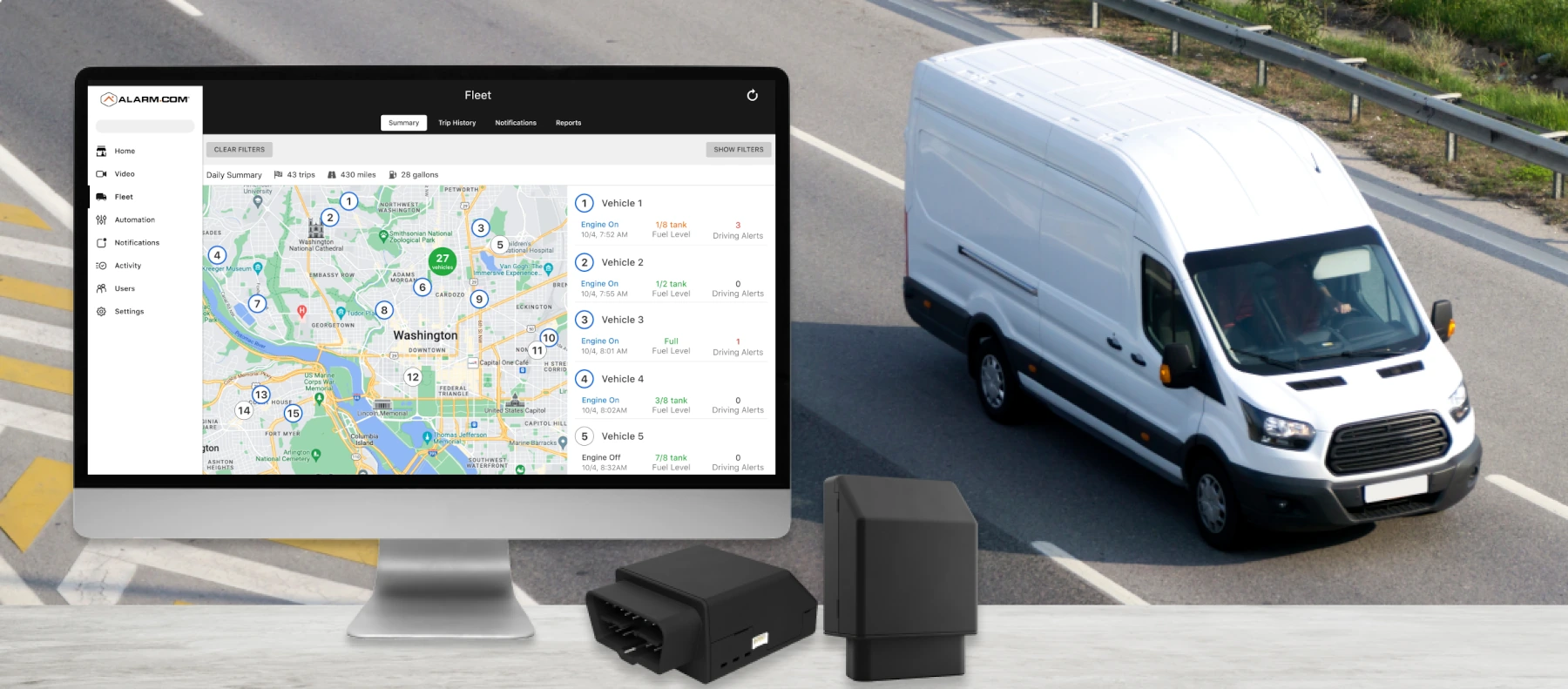
Getting started is genuinely simple. The ADC-CC100 Car Connector plugs into a vehicle's OBD-II port, the same port a mechanic uses, in under five minutes with no tools and no installer appointment. It works with essentially any van or light truck built after 1996, connects over LTE, and includes battery backup so it keeps reporting even if unplugged. Any office manager can deploy an entire fleet over a lunch break, and the dashboard supports up to 100 vehicles per site inside the same Alarm.com app that can also run your shop and yard security.
If you run a small to mid-size electrical or trade fleet, want real vehicle telematics without a long-term contract, and especially if you also have a shop or yard full of copper and tools to protect, Connected Fleet through Surety Business is built for you. Explore plans and pricing at Surety Business Fleet, read more about how Alarm.com Connected Fleet works, and if you have questions the Surety Support team is ready to help. Before you roll tracking out to your crew, set clear expectations with your team; the Surety Business guide to tracking company vehicles without creating an HR problem covers how to do it well.
Frequently Asked Questions
- How does GPS fleet tracking help electricians win more jobs?
The electrician who responds and arrives first usually wins the work. Real-time GPS lets you see which crew is closest and licensed for the scope, so you can give a caller a confident arrival window and send the right van instead of guessing. Harvard Business Review research found that responding to a lead within an hour makes you nearly seven times more likely to have a meaningful conversation, so faster, more confident dispatch directly improves your booking rate.
- Can fleet tracking help me send the right licensed electrician to a job?
It helps you make that decision faster. The live map shows where every van is, and because you know each technician's license level, you can send the closest crew that is actually licensed for the scope rather than the next available truck. That keeps your master and journeyman hours aimed at the work that legally requires them and avoids second trips. The software provides the location; you make the dispatch call.
- How does tracking help with permits and inspections?
You can see when a crew has finished a rough-in or final and cleared the site, which makes it easier to schedule the inspection and have someone there to meet the inspector in a tight window. If an inspection fails and a re-inspection is needed, you can see which crew is positioned to swing back fastest. Trip logs also document when your crews were on each site, which helps settle schedule disputes with a general contractor.
- Will GPS tracking help recover stolen copper, tools, or a work van?
It improves your odds. The ADC-CC100 connects over LTE and has a built-in backup battery, so it keeps reporting location even if it is unplugged or vehicle power is cut, and it can be placed on equipment trailers as well as vans. You can relay the live location to law enforcement quickly. The National Insurance Crime Bureau notes recovery rates for stolen equipment are low, so fast location matters, especially for electrical fleets carrying copper and expensive tools.
- Can fleet tracking prove my crew was on site for T&M billing?
Yes. Trip logs record exact arrival and departure times, route, distance, and duration, all exportable. When a customer or a general contractor disputes travel time, on-site hours, an extra trip charge, or whether anyone showed up, timestamped GPS data settles it, which protects your invoices and your credibility on time-and-materials and subcontract work.
- Does Connected Fleet replace my dispatch or field service management software?
No, and it is not meant to. FSM tools like ServiceTitan, Housecall Pro, and Jobber run scheduling, the dispatch board, estimates, invoicing, and customer messaging, usually with phone-based GPS. Connected Fleet is dedicated vehicle telematics: hardwired OBD-II location with battery backup, diagnostic trouble codes, idle and fuel data, and driver behavior scoring that phone GPS does not capture. They solve different problems and work well together, and Connected Fleet costs far less because it is one focused device at $8 to $15 per vehicle per month rather than a full per-user software suite.
- What size electrical or contracting business is Connected Fleet best for?
It is an especially strong fit for small to mid-size trade fleets of roughly 2 to 20 vehicles that are owner-run or managed by a single office person, want real vehicle telematics without a long-term FSM contract, and also have a shop, warehouse, or yard full of tools and copper to protect. Larger operations with dedicated dispatchers may keep a full FSM platform for scheduling and run Connected Fleet alongside it for the vehicle-level data and theft protection FSM phone GPS lacks.
- Is fleet tracking worth it for just a few trucks?
Often yes. Even a two or three van shop benefits, because one recaptured disputed invoice, a few more completed service calls a week from tighter dispatch, or one recovered van or copper-loaded trailer can cover the cost many times over at $12 per vehicle per month. There is no long-term contract, so a small shop can try it and scale up or cancel.
- Can I secure my shop and track my fleet with one system?
Yes, and that is a key advantage of Surety Business. Because Connected Fleet runs on Alarm.com for Business, the same app that tracks your vans also delivers intrusion alarm, security cameras, and access control for your shop, warehouse, or yard where wire, panels, and tools are stored. You get one app, one vendor, and one bill, fleet and building events on a shared timeline, and with an alarm system your first fleet vehicle drops from $15 to $12, so every vehicle is at the $12 rate. Connected Fleet is also available on its own if you only need vehicle tracking.
